Hand Held Scanners

Home | News | Contents | Search | Contact Us | Contact Details

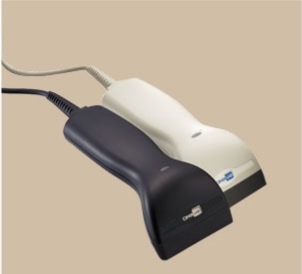
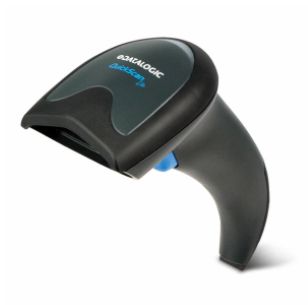
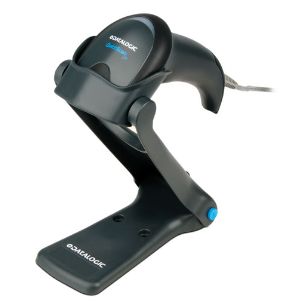
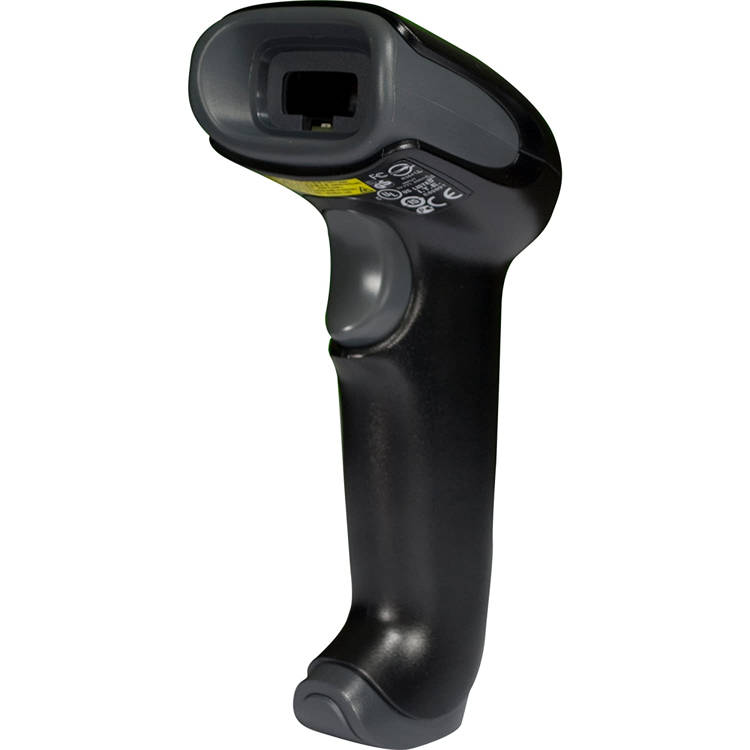
 Lasers, CCDs, Wands, Linear and 2D Imagers are the most common types of barcode scanner families available today.

 There are usually several variations of read range, scanning resolution and speed within each family to cater for different applications.


Quick Links
.........................................


Wands are pen - like readers that must be scribed across the surface of the barcode in order to read it. Advantages include the ability to read in full sunlight and to scan very long barcodes. Disadvantages : Successful reads are affected by the scribe speed and angle. Repeated scans may damage some barcode labels. They have largely been replaced by short read range CCD scanners like the Scanteam 3215.
 
 
  The Welch Allyn Scanteam 2380 wand shown above features keyboard wedge or serial interface, automatically detects and decodes up to 11 of the most common barcode symbologies, beeping once they are decoded. The decoder tolerates a wide range of scan speeds (5 to 127cm/s). It has a rugged metal body (withstands 90cm drops onto concrete) and has a replaceable sapphire tip for longer service life. Many functions can be customized by scanning the appropriate programming barcodes in the manual (e.g. turning the beeper on / off, limiting decoding to certain symbologies etc.).

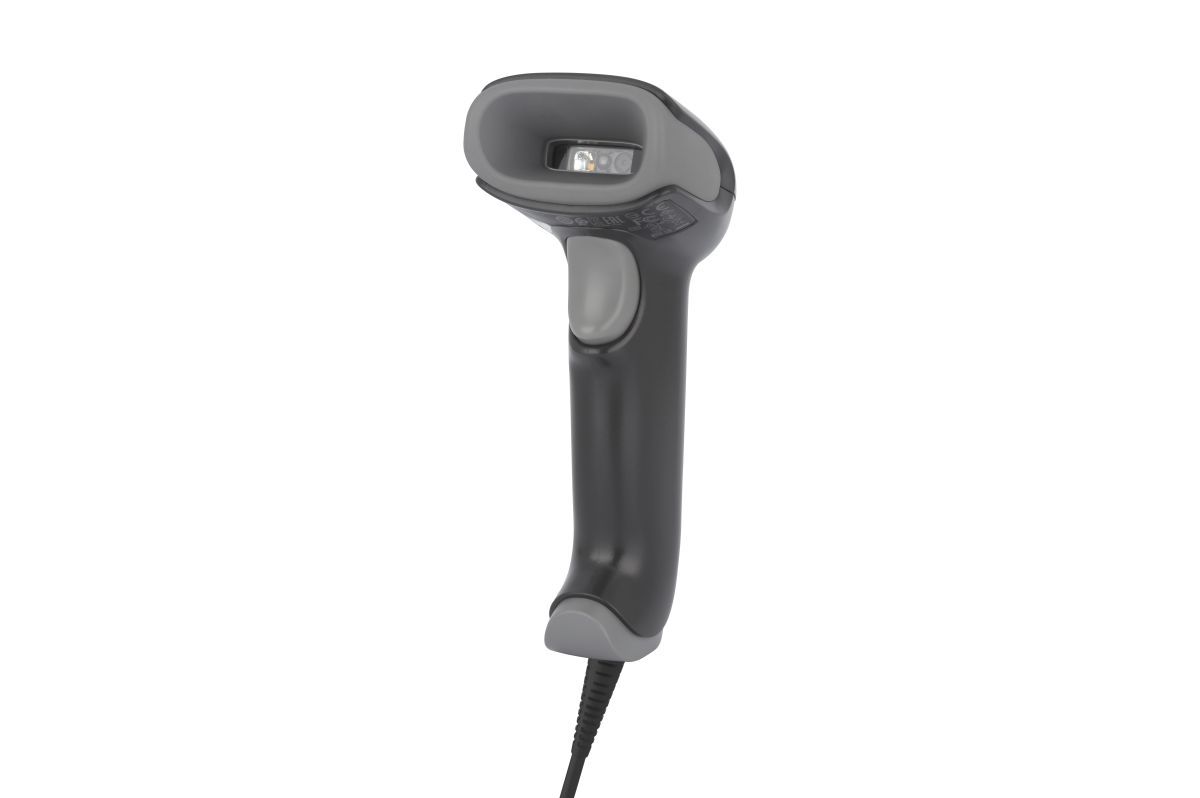
  CCD scanners are held like a gun, aimed and when the trigger is pulled, they read the barcode. They illuminate the whole width of the barcode at once and therefore do not require any operator motion. Advantages include the ability to read in full sunlight, to read barcodes printed on rough surfaces such as cloth, no internal moving parts (very reliable) and low cost. Disadvantages: Read range is limited to about 2cm for the low end scanners up to about 20cm for the new linear imager. The widest barcode width that can be read with the low end (short range) scanners is limited to about 6cm.
  The Welch Allyn Scanteam 3215 CCD shown above features keyboard wedge, serial interface or wand emulation, automatically detects and decodes up to 12 of the most common symbologies, beeping once they are decoded. Many functions can be customized by scanning the appropriate programming barcodes in the manual (e.g. turning the beeper on / off, limiting decoding to certain symbologies, adding prefixed or suffixed characters such as carriage return / line feed etc.). The interface can also be changed (keyboard wedge / serial port / wand emulation) by a combination of programming the scanner and replacing the detachable cable. There are three models of the 3215, a contact model that can read medium density barcodes (13mil) from contact to about 2.5cm. The 3215HD model that reads medium to high density barcodes from contact to about 5.5cm. The 3215LR long range model that reads medium density barcodes at about 12.5cm. The 3215 HD and LR have mostly been replaced by the linear imager. 

  Linear Imager scanners are very similar to CCD scanners except that they have a much longer read range and the scanning illumination is a narrow, focused line that makes aiming easier. Advantages: Able to read in full sunlight, read very long barcodes, read barcodes printed on rough surfaces (cloth), has a long read range compared to other CCD scanners. They are very reliable with a five year warranty from Welch Allyn. Disadvantages: The range of scanning distances (depth of field) is still not as wide as a laser scanner and the cost puts them at the top end of the CCD range of scanners.
  The Welch Allyn Imageteam 3800 shown above features several interface methods, including keyboard wedge or serial interface, automatically detects and decodes ten common symbologies, successful reads being signaled by a beep. Many functions can be customized by scanning the appropriate programming barcodes in the manual (e.g. turning the beeper on / off, limiting decoding to certain symbologies, adding prefixed or suffixed characters such as carriage return / line feed etc.). The interface can also be changed (keyboard wedge / serial port / wand emulation) by a combination of programming the scanner and replacing the detachable cable. The enhanced decoding algorithms enable successful reads from poor quality barcodes. The linear imager offers similar read range to a low end laser scanner with greater reliability and in many cases at lower cost. 

  Laser scanners are perhaps still the easiest to use and most popular of all scanners. They are also trigger operated like the CCDs. They have a self- scanning laser beam that allows scanning from close up through to the maximum range. Low end lasers have a maximum read range of about 45cm and long range scanners (when reading low density, reflective labels indoors) can have read ranges of several meters. Advantages: Aggressive, fast decoding of a range of barcode densities over a long distances. Can read very long barcodes.  A bright red scanning stripe makes aiming easy, even at long distances. Disadvantages: Decreased read range in bright sunlight, has difficulty reading barcodes printed on some rough surfaces. Internal scanning mechanism is subject to wear and damage from shock. Laser diodes are expensive and in the case of long range (high power) scanners, may cause eye damage if shone directly into an eye. 
  The PSC QuickScan 6000 Plus shown above is a versatile low end laser scanner that supports most common point of sale serial port and keyboard wedge interfaces automatically detects and decodes twelve barcode symbologies.  It has a read range from 2.5cm to 48cm. Many functions can be customized by scanning the appropriate programming barcodes in the manual (e.g. turning the beeper on / off, limiting decoding to certain symbologies, adding prefixed or suffixed characters such as carriage return / line feed etc.). The interface can also be changed (keyboard wedge / serial port / wand emulation) by a combination of programming the scanner and replacing the detachable cable.

  Cordless RF scanners are available for CCD and laser scanners. They give  the operator freedom of movement in applications where it is difficult to move the objects to be scanned within range of a cabled scanner. Communication is usually by spread spectrum radio. Power is supplied by a rechargeable battery in the handle of the scanner. Advantages: Freedom of movement, multiple scanners can be used on one base, no user license required. Disadvantages: Cost. Limited range from base station.
  The Welch Allyn Scanteam 5770 STD cordless laser scanner and the 2070 base station shown above features a choice of CCD or laser scanners (they automaticaly detect and decode up to 10 of the most common barcode symbologies), each base station can support up to nine scanners simultaneously. Each base station supports up to nine application work groups (increasing the number of jobs supported by a terminal. They have a working range of about 15 meters. Each scanner is rated at IP-54 (water and dust resistant) and has removeable, rechargeable batteries.
           

Home | News | Contents | Search | Contact Us

Send mail to barcode.tech@mweb.co.za with questions or comments about this web site.
Copyright © 2001 Barcode Technologies
Last modified: October 02, 2001
All product or trade references are the trademarks or registered trademarks of their respective owners.